Understanding Ethereum’s Current Inflation Dynamics
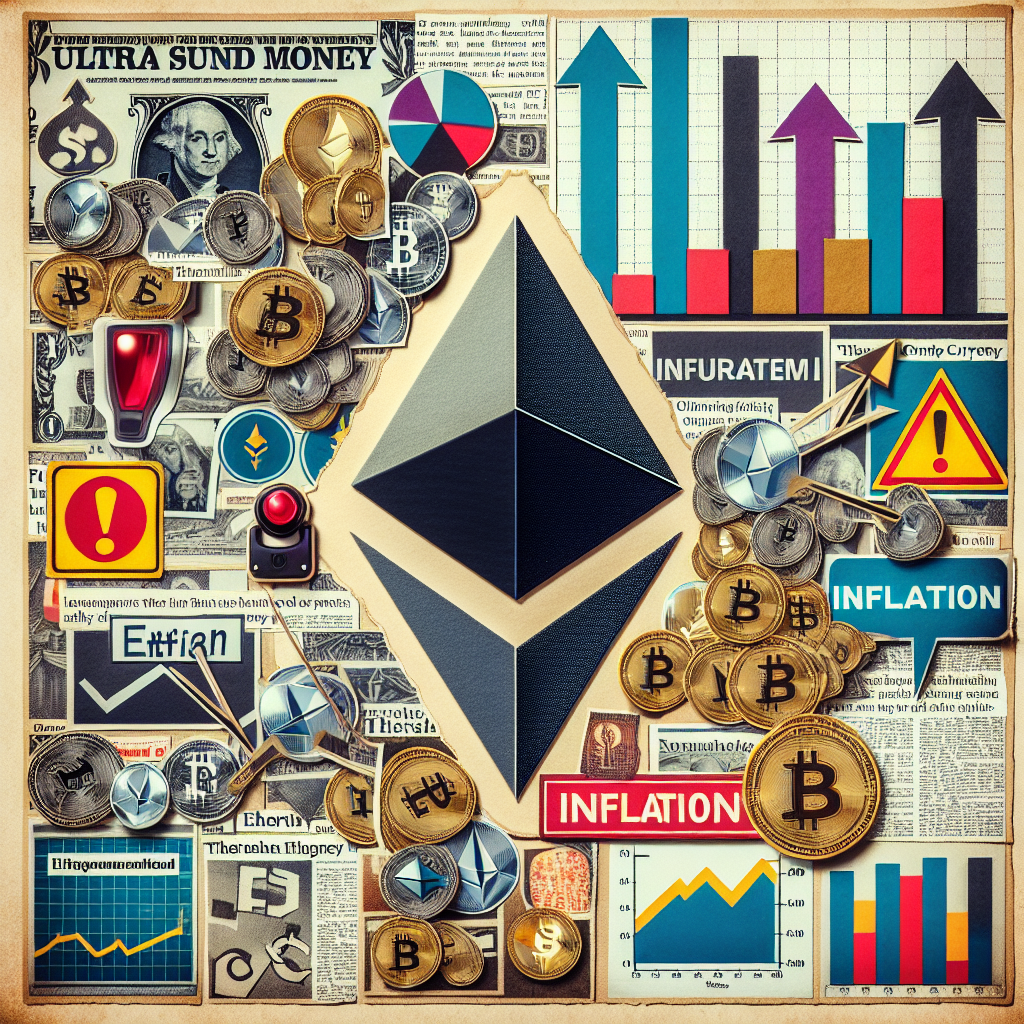
Ethereum, a cornerstone in the cryptocurrency realm, is experiencing a significant shift in its economic structure. Recent findings from a Binance Research report indicate Ethereum’s inflation rate has climbed to a two-year high of 0.74%. This development raises questions about Ethereum’s promise as “ultrasound money” and its ability to maintain a deflationary status.
The Role of Layer-2 Solutions in Ethereum’s Inflation Rise
The emergence of layer-2 solutions such as Arbitrum and Optimism has significantly altered Ethereum’s economic framework. These solutions process transactions outside the Ethereum mainnet, which reduces gas fees. Consequently, there is a noticeable dip in the amount of ETH being burned through transaction fees, which plays a crucial role in Ethereum’s deflationary mechanism.
Introduced in 2021, Ethereum Improvement Proposal (EIP) 1559 aimed to manage transaction fees by burning a part of them. However, with the reduction in mainnet transactions, the volume of burned ETH has decreased, contributing to the current inflationary trend.
Insights from Binance on Ethereum’s Inflation
A spokesperson from Binance highlighted that the Dencun upgrade has further promoted the adoption of low-fee layer-2 solutions, slowing down the ETH supply burn rate. While Ethereum’s inflation is currently under 1%, these pressures are typically temporary. They tend to rise during periods of low network activity but can revert when activity increases.
The Challenged Narrative of “Ultrasound Money”
Ethereum has long been considered by its community as a deflationary currency, a narrative that is now under scrutiny. The Binance report suggests that the cannibalization of network activity by layer-2 solutions, along with broader market conditions, has led to a decline in transaction fees and, consequently, the burned fees on Ethereum. This has caused ETH issuance to outpace burns, moving Ethereum away from its deflationary ambitions.
Vitalik Buterin’s Push for Solo Staking
Vitalik Buterin, Ethereum’s co-founder, recently emphasized his support for reducing the minimum ETH deposit for solo stakers. Currently, solo stakers need to lock up 32 ETH to run a full node, which can be a barrier for broader participation. Buterin advocates lowering this requirement to 16 to 25 ETH, which could potentially increase network engagement.
Implications for Ethereum’s Future
Understanding these dynamics is crucial for stakeholders within the Ethereum ecosystem. The interplay between layer-2 solutions and Ethereum’s economic model highlights the complexities of maintaining a deflationary currency in a rapidly evolving technological landscape. As Ethereum continues to adapt, the community will need to navigate these changes to sustain its value proposition and market standing.