Unveiling the Swiss Nuclear Bunker Bitcoin Vault
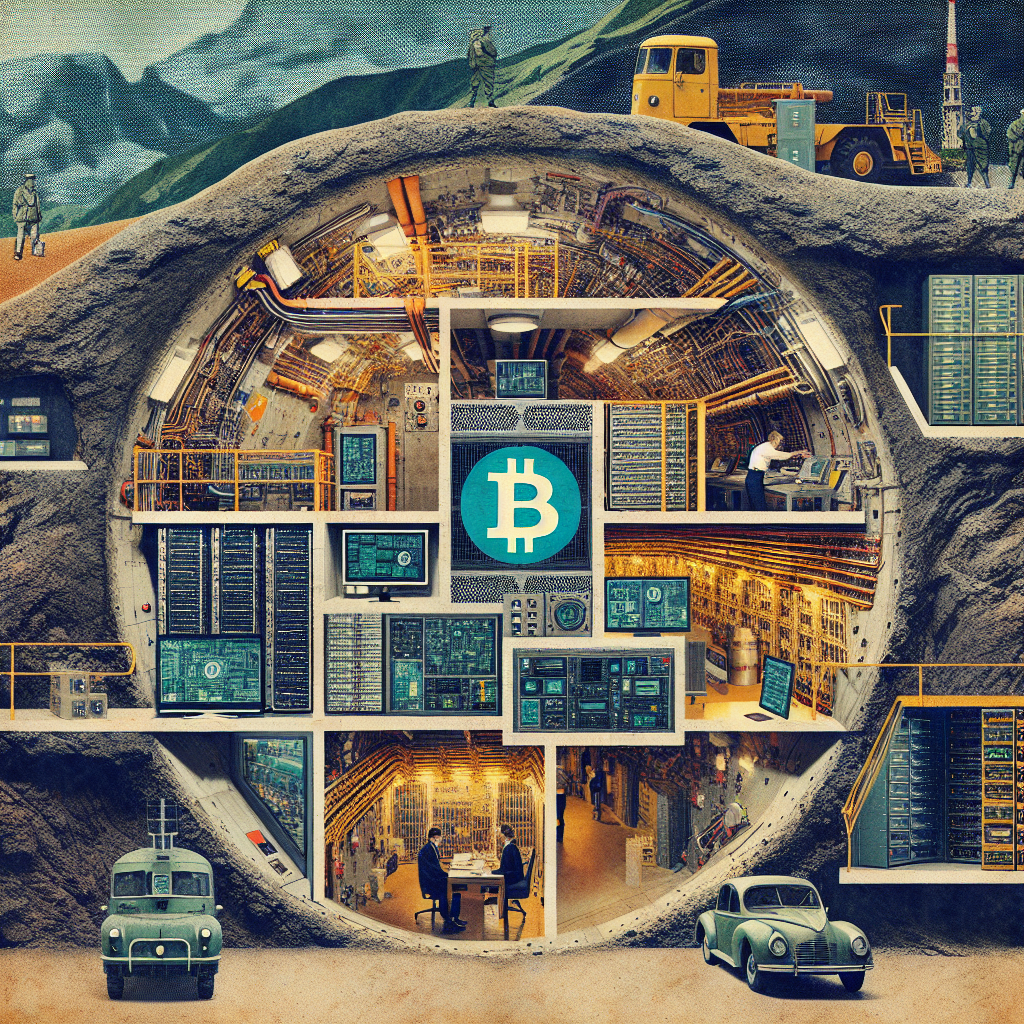
A cutting-edge nuclear bunker in the Swiss Alps is safeguarding a significant amount of Bitcoin. Cointelegraph explored this facility to understand how multiparty computation (MPC) shards stored in bunkers provide advanced security for one of the world’s first Bitcoin banks.
The Challenge of Bitcoin Storage
Storing Bitcoin securely is a significant challenge. The phrase “not your keys, not your coins” highlights the importance of controlling one’s private keys. However, hiding hardware wallets or seed phrases isn’t a long-term solution, especially with an estimated 2 million BTC lost forever. Some people store their Bitcoin on exchanges, while others move it into cold storage.
The Fortress-Like Security of Xapo Bank
Xapo Bank offers a unique service by storing clients’ Bitcoin in underground bunkers. During a visit to one such bunker, the security measures were immediately evident. Albert Rocca, Xapo’s senior HQ account manager, took visitors’ phones and placed them in a Faraday cage to prevent tracking. The helicopter ride to the bunker landed on a small strip beneath a towering mountain. The entrance, a granite surface with a military-style door, was just the beginning.
Layers of Security in the Bunker
Entering the bunker requires passing through multiple security layers. After an ID check and pat-down, visitors receive a magnetic card to access various points in the facility. The first major barrier is a six-ton vault door designed to withstand a nuclear blast. The guard scanned his retina and entered a constantly changing code to open it. Inside, another barrier used biometric data to verify visitors.
The Inner Sanctum of Bitcoin Storage
The tunnel leading into the mountain eventually brings visitors to the vault doors. Andrew Mannoukas, Xapo’s chief information security officer, explained the intricate security measures. The final door houses an MPC shard, one of several globally distributed to ensure no single entity can control the full private key.
Prepared for Any Situation
The bunker is equipped to handle various threats. It includes two 1-megawatt diesel generators and a HEPA air filtration system. An underground lake helps cool server rooms, reducing the need for power-intensive air-cooling systems. High-security clearances are required for different sections, and an emergency exit is monitored by a remote security service.
Transition from Multisig to MPC
Xapo Bank switched from multisignature signing to MPC technology in 2023. Previously, guards manually handled hot and cold wallet movements daily. MPC technology, using homomorphic encryption, eliminates the risk of exposing private keys. Mannoukas compared the MPC process to chefs adding secret ingredients to a dish, creating a secure signature without revealing individual parts.
The Cost of Security
Maintaining such high security comes at a significant cost, with the bunkers alone costing millions annually. However, this level of protection is a major draw for clients who prefer not to handle self-custody.
In conclusion, Xapo Bank’s use of state-of-the-art security measures in a Swiss nuclear bunker illustrates the lengths some institutions will go to protect Bitcoin. The combination of physical and digital security ensures that clients’ assets are safeguarded against various threats.