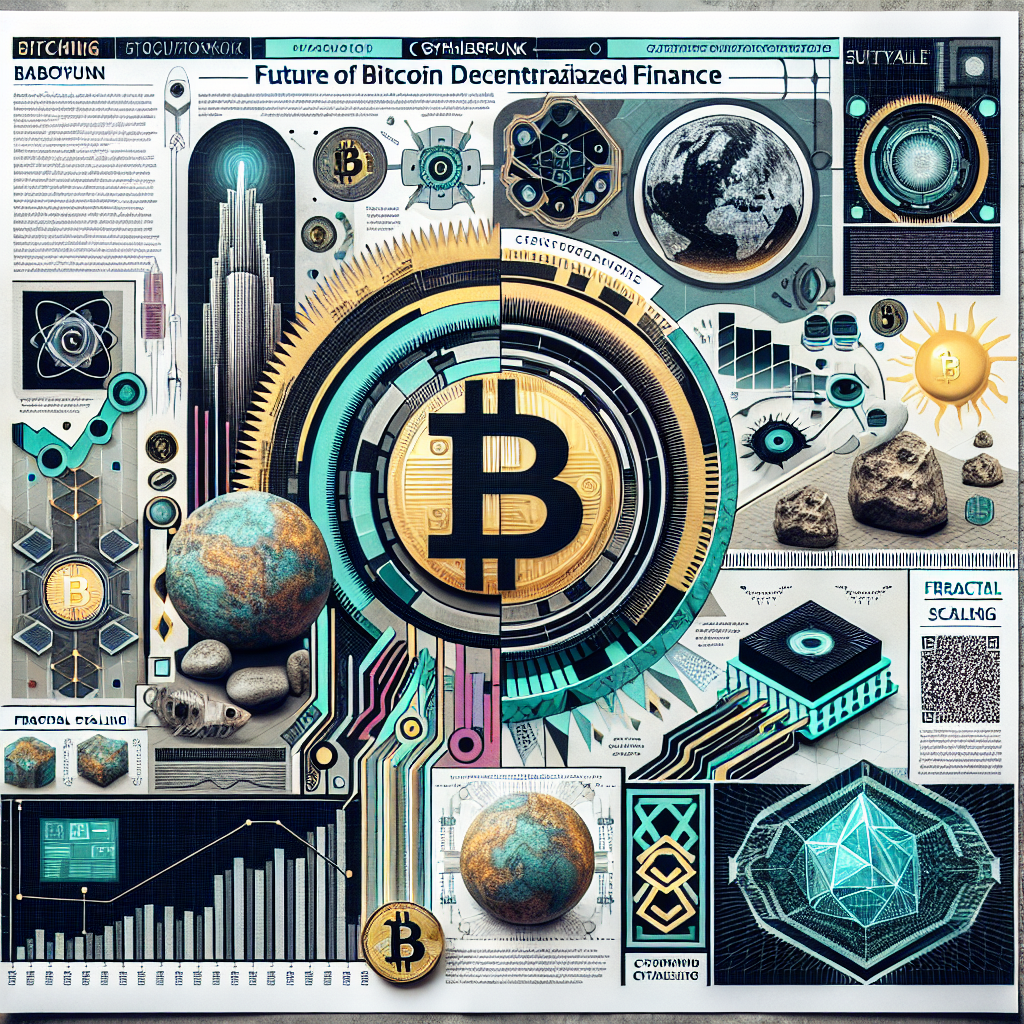
The Future of Bitcoin DeFi: Introducing Babylon Staking and Fractal Scaling
Bitcoin continues to cement its position in mainstream finance. Alongside this, Bitcoin-based decentralized finance (BTCFi) is also seeing significant growth. Recent developments by HTX Ventures, such as Babylon staking and Fractal scaling, are pushing the boundaries of BTCFi. These projects highlight how Bitcoin’s evolving programmability can be harnessed to create advanced financial applications.
Babylon: Revolutionizing Bitcoin Staking and Liquidity
Babylon is pioneering Bitcoin-native staking, a concept that was previously non-existent. This innovation has been made possible through several upgrades to Bitcoin, including Schnorr signatures, the Taproot upgrade, and enhancements to Bitcoin’s scripting language, Tapscript. These upgrades enable Bitcoin to support more complex smart contracts, paving the way for efficient and private staking transactions.
Babylon has already garnered attention from numerous projects aiming to bring liquidity into its ecosystem. StakeStone, for instance, offers native staking yields on various layer-2 networks. Uniport is another example, providing an interoperability protocol that connects Bitcoin ecosystem assets like BRC20 tokens, RGB, and Taproot assets to Ethereum. Additionally, Chakra, a restaking protocol based on zero-knowledge proofs, will also utilize Babylon.
Babylon generates yield in the form of tokens on the validated chain rather than directly as BTC. This approach opens up new avenues for Bitcoin holders to earn returns on their assets.
Fractal Bitcoin: Enhancing Scalability Beyond the Mainnet
Fractal Bitcoin represents a network of sidechains that operate virtualized instances of Bitcoin Core. This recursive, multi-layered system allows for improved scalability without altering Bitcoin’s base layer. Each instance of Bitcoin Core operates independently, validating its own chain. Periodically, these instances submit proofs to the main chain, ensuring that transactions achieve finality with the same level of security as the Bitcoin mainnet.
Fractal’s modular approach ensures compatibility with Ordinals BRC-20 tokens and Runes. The anchoring process allows virtual instances to operate at higher capacities while maintaining network security. Although discreet log contracts facilitate cross-chain trades, they do not serve as a genuine bridging mechanism for peg-ins and peg-outs between the Bitcoin mainnet and Fractal’s sidechains.
Fractal also employs a unique Cadence mining mechanism. In this system, every third block produced on the Fractal Bitcoin network can be merge-mined with Bitcoin. This allows Bitcoin miners to validate both Bitcoin and Fractal Bitcoin blocks simultaneously without additional computational resources. However, the remaining two-thirds of the blocks must be mined exclusively for the Fractal network. This structure balances Fractal’s independence from the main chain while leveraging Bitcoin’s security infrastructure during merged mining intervals.
A Promising Future for BTCFi
Bitcoin’s recent surge in value, driven by mainstream adoption, is likely to increase demand for BTCFi solutions. Innovations like Babylon’s staking models and Fractal’s scalability solutions indicate that Bitcoin’s role in finance is expanding beyond its original digital gold narrative. These developments suggest a bright future for BTCFi, offering new opportunities for Bitcoin holders to engage with advanced financial applications.
As Bitcoin continues to evolve, projects like Babylon and Fractal highlight the potential for BTCFi to revolutionize the financial landscape. By leveraging Bitcoin’s programmability and security, these initiatives are paving the way for a new era in decentralized finance.